Peerless
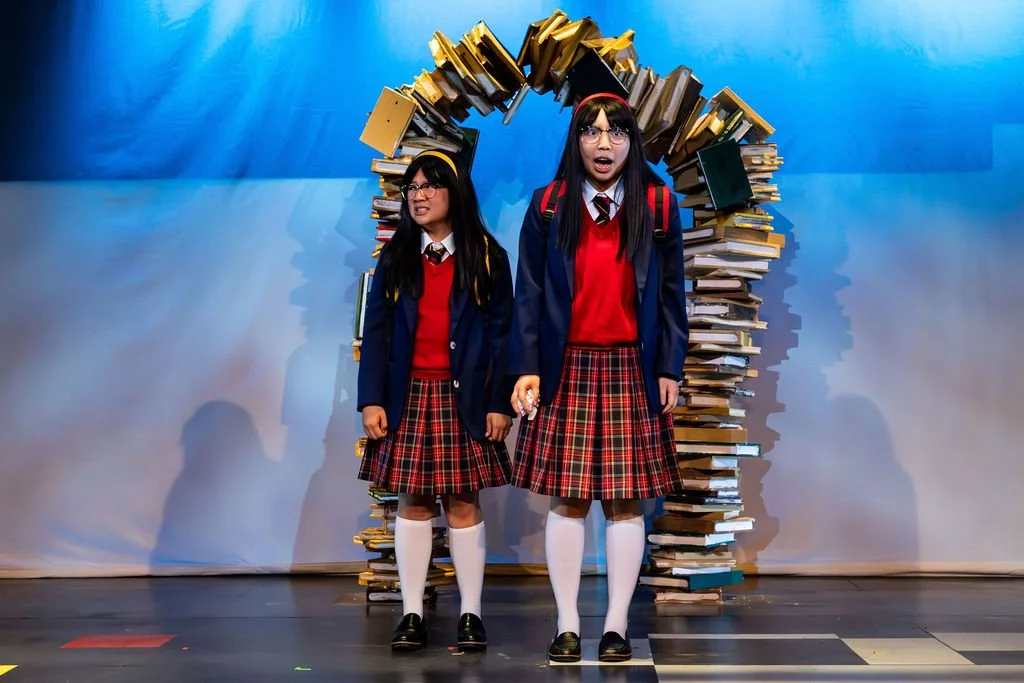
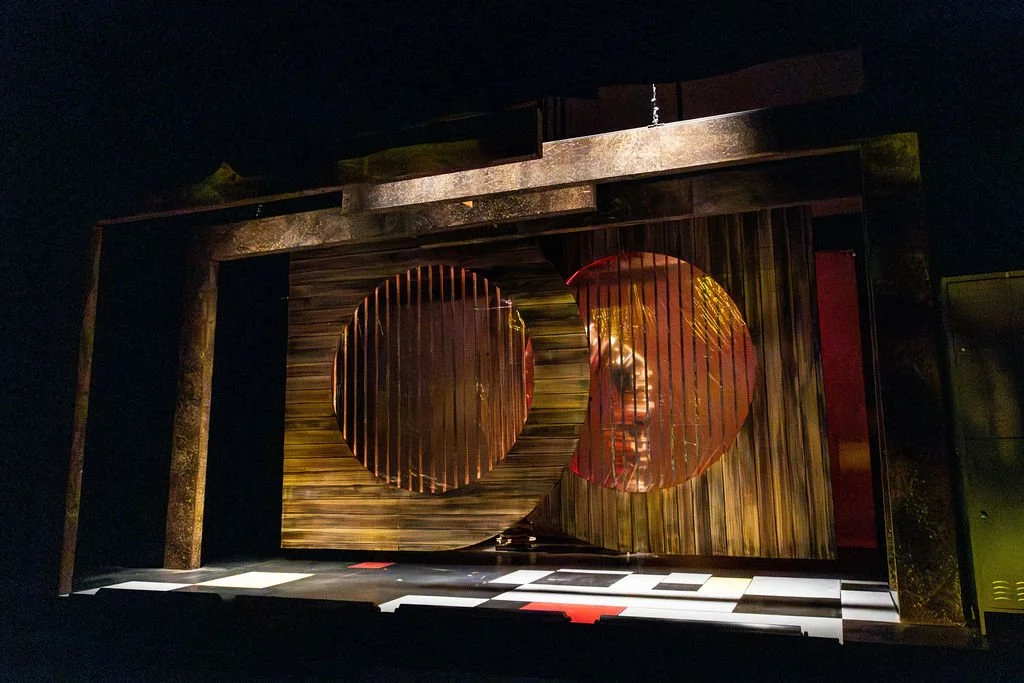
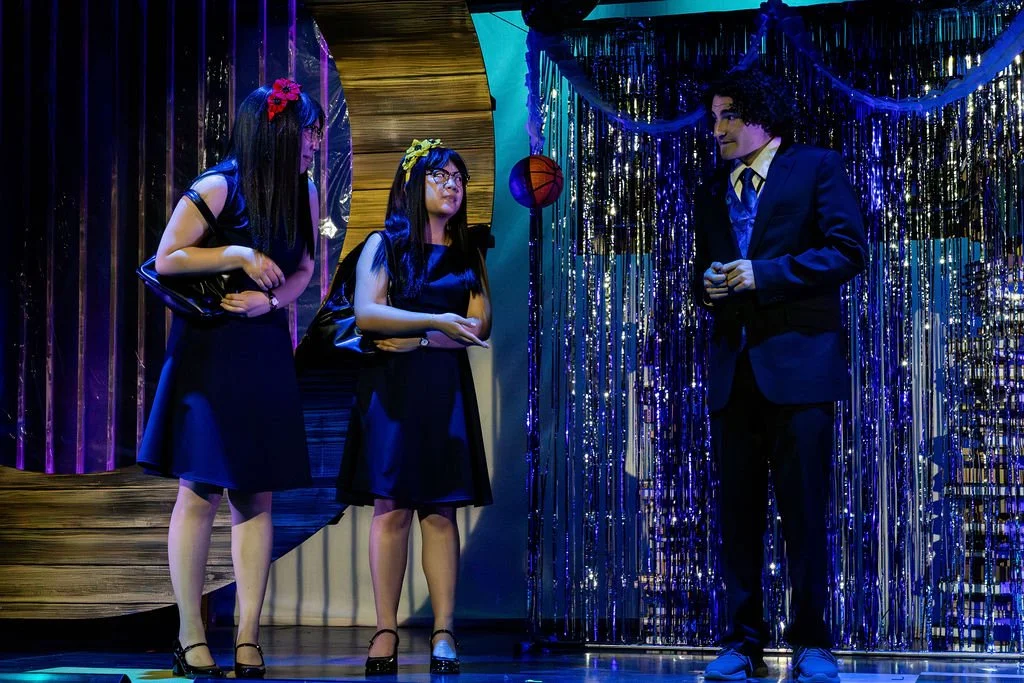
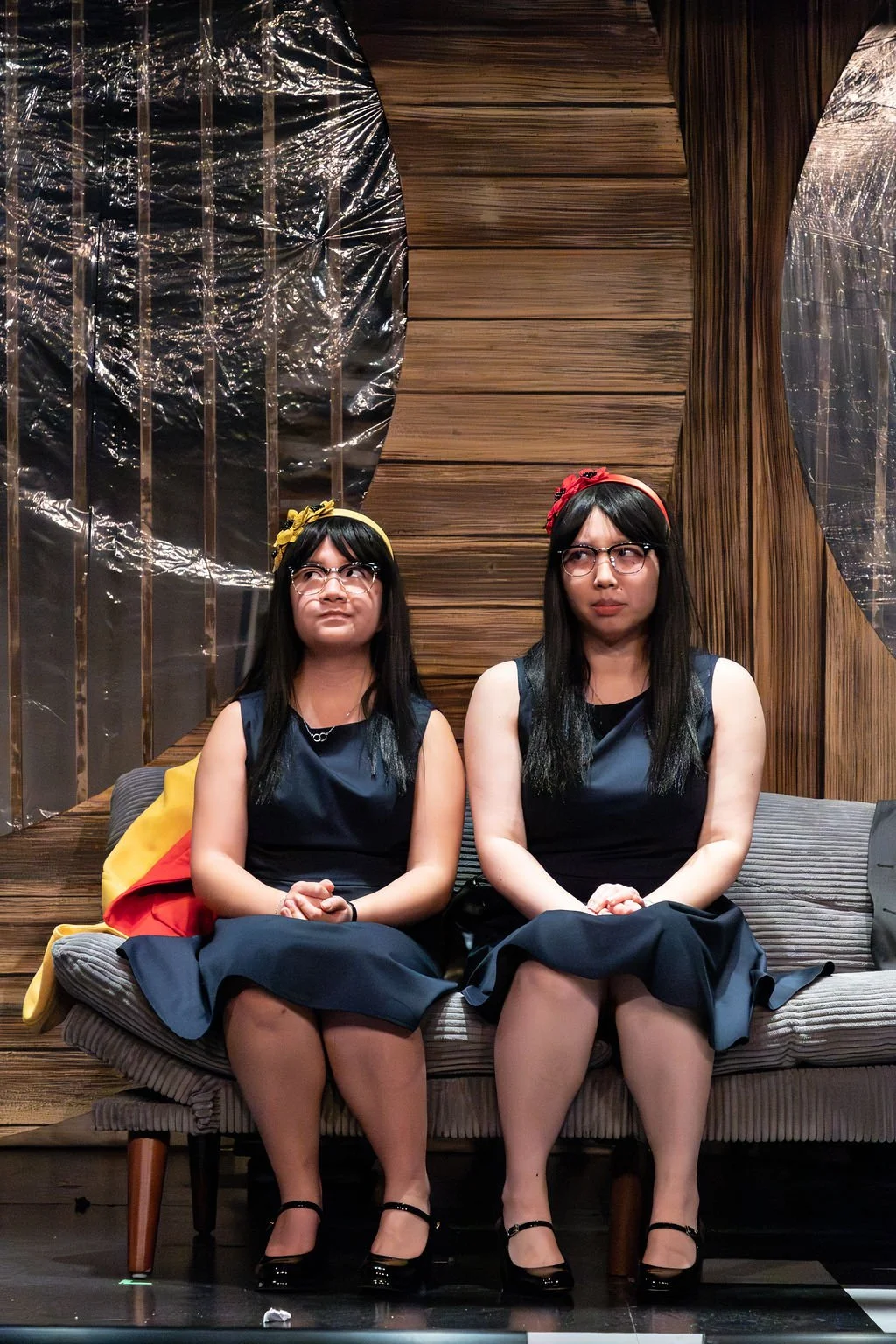
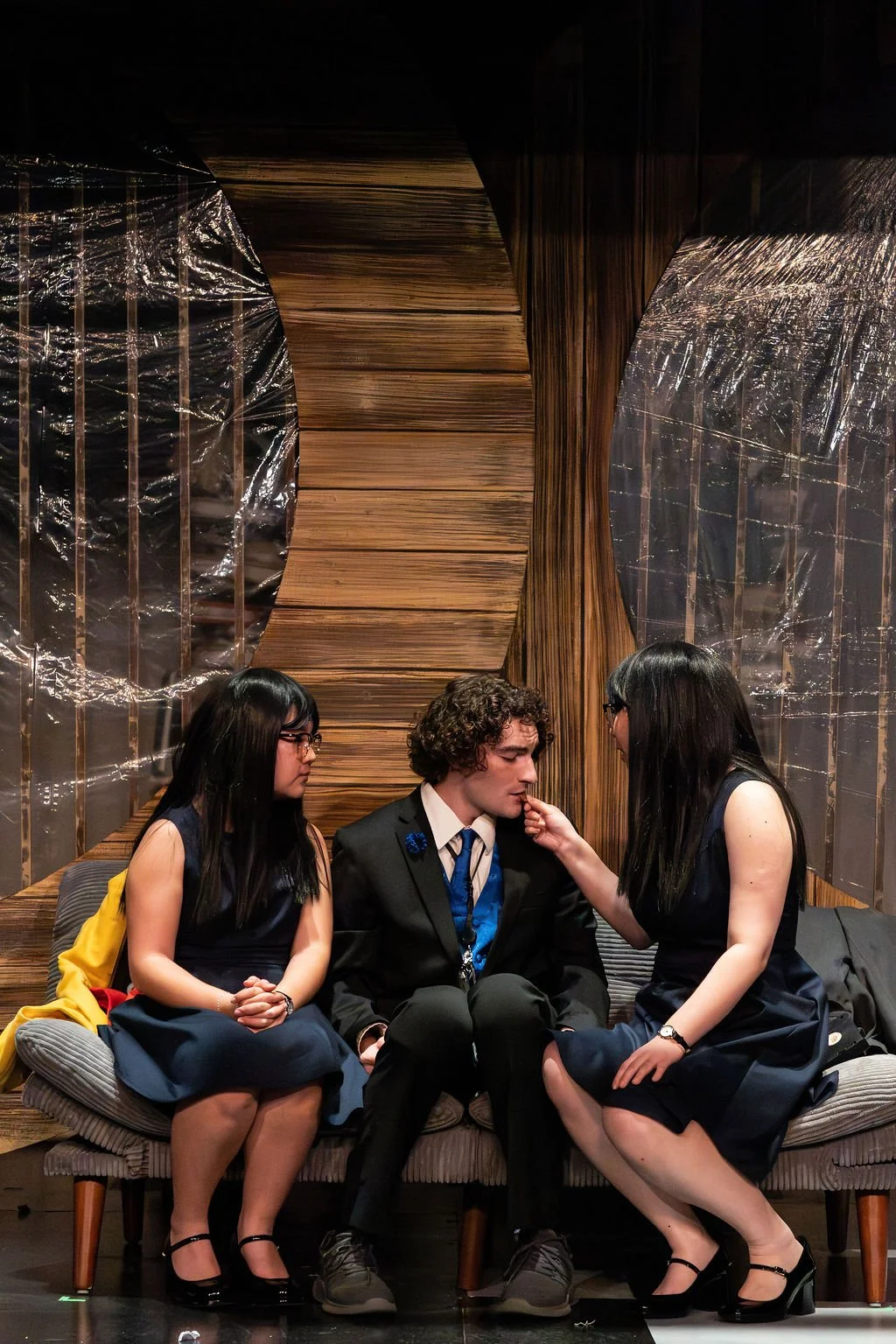
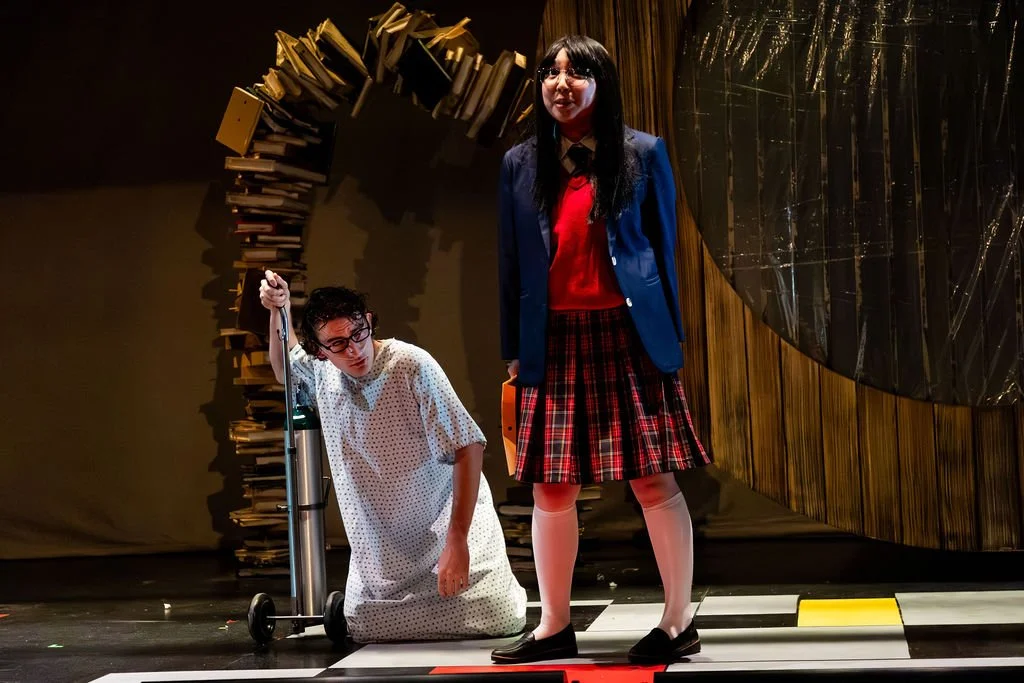
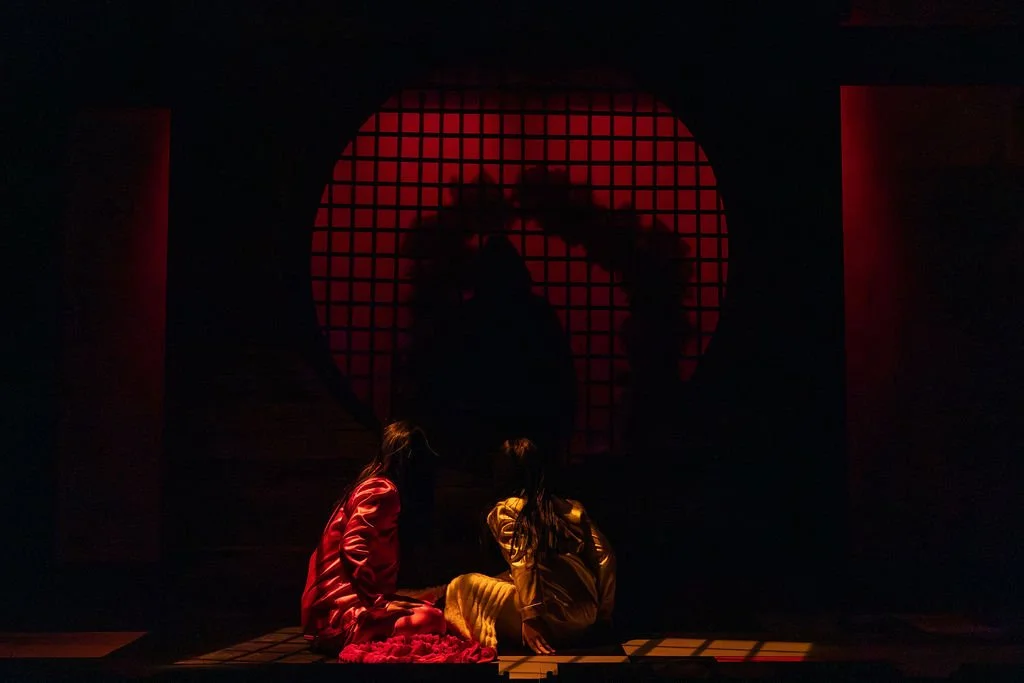
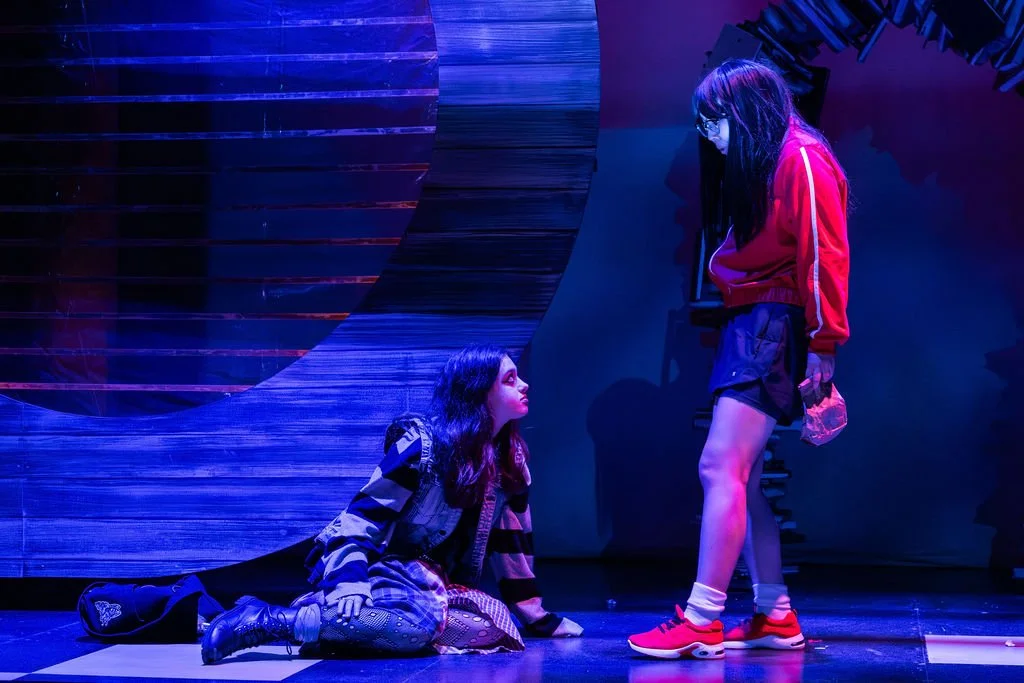
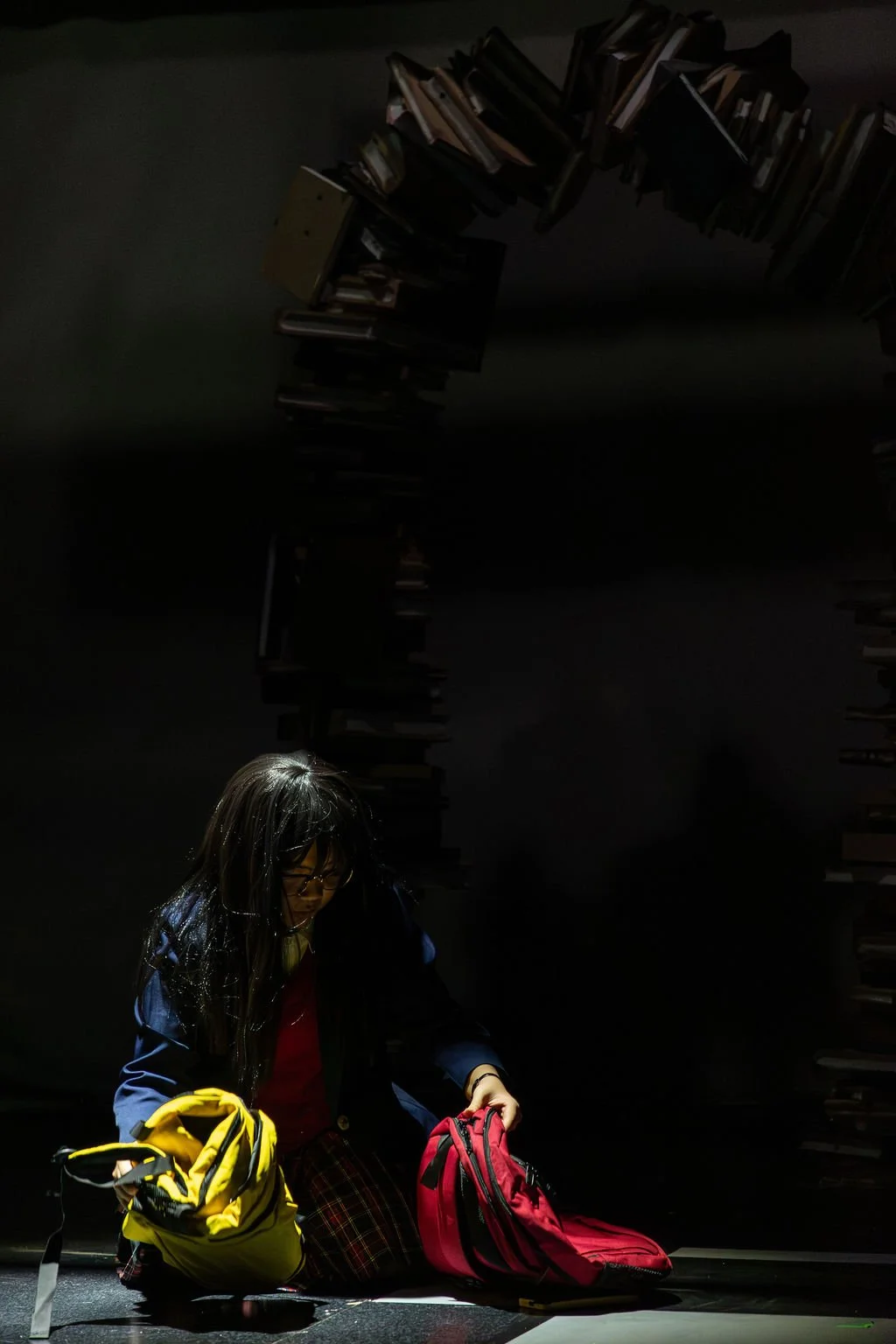
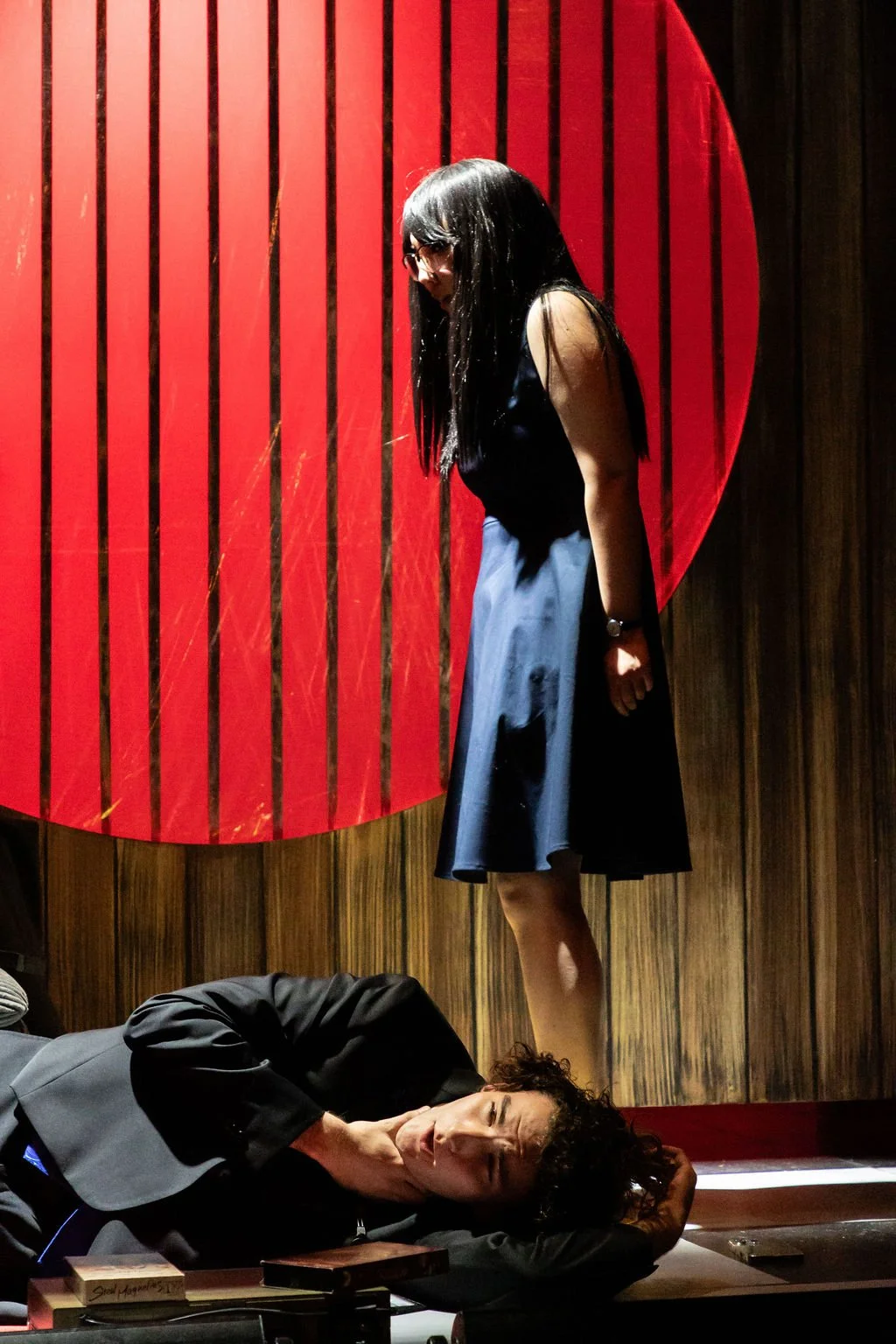
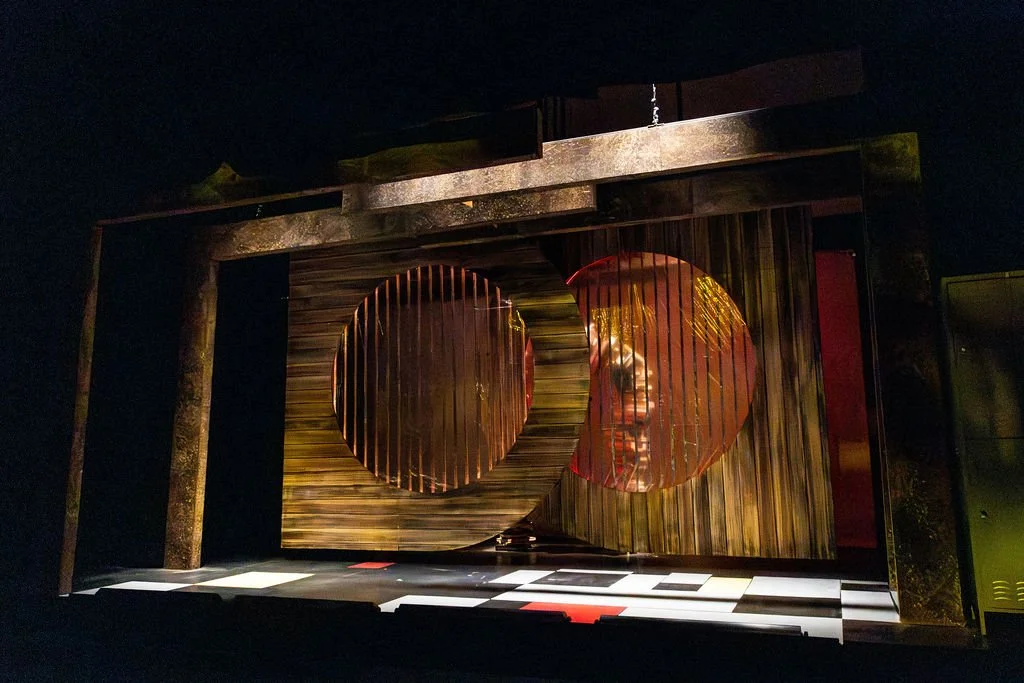
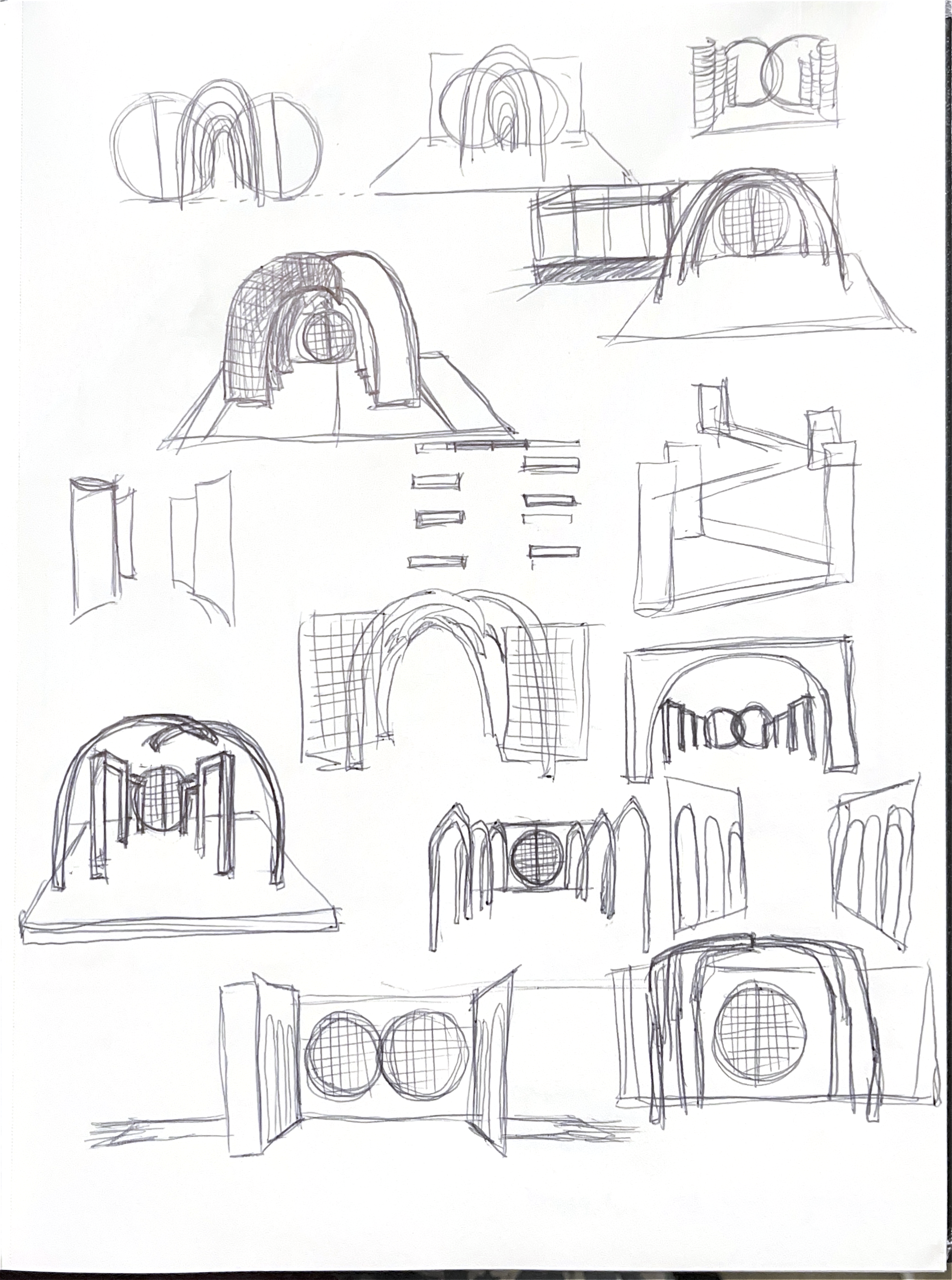
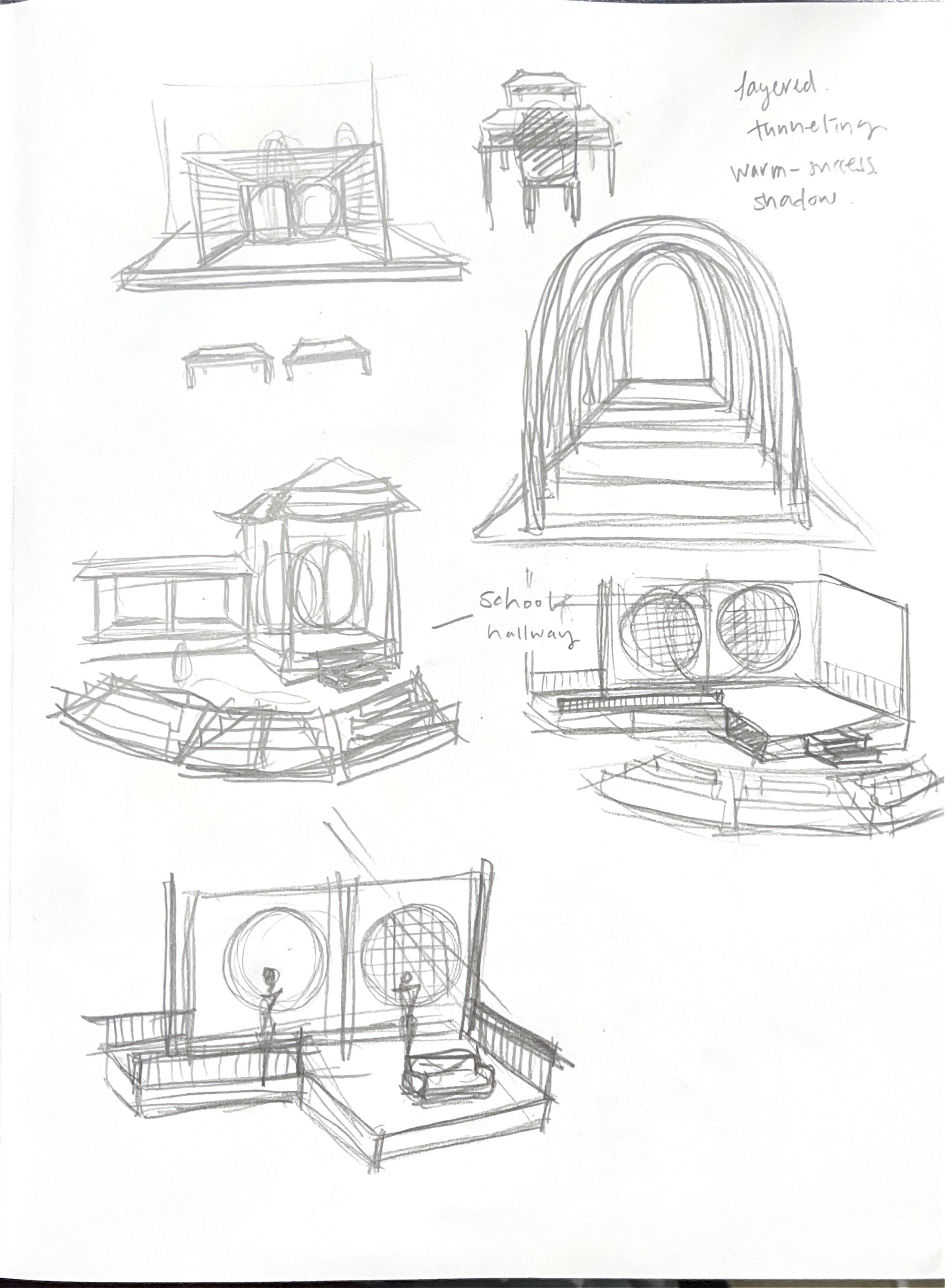
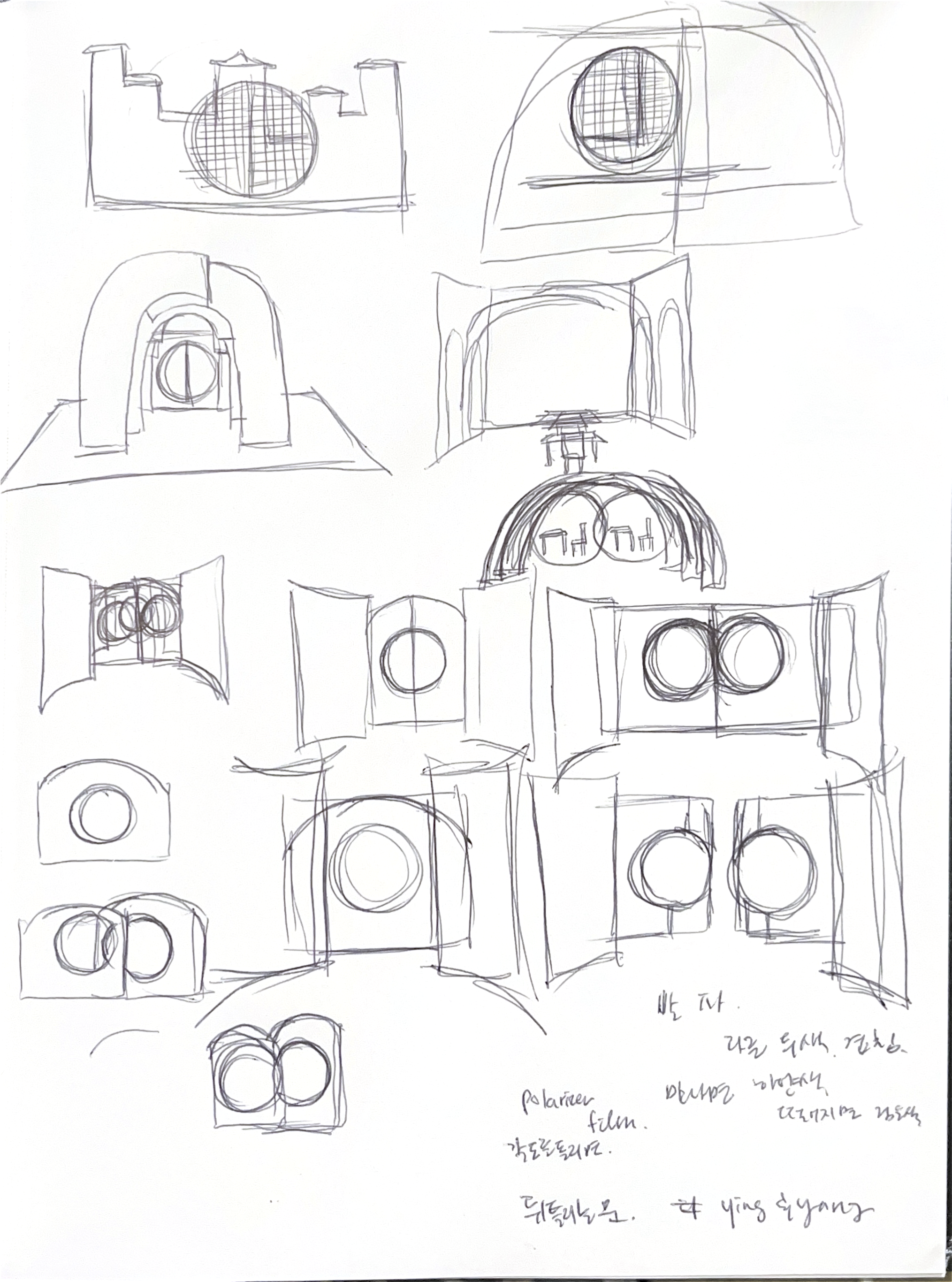
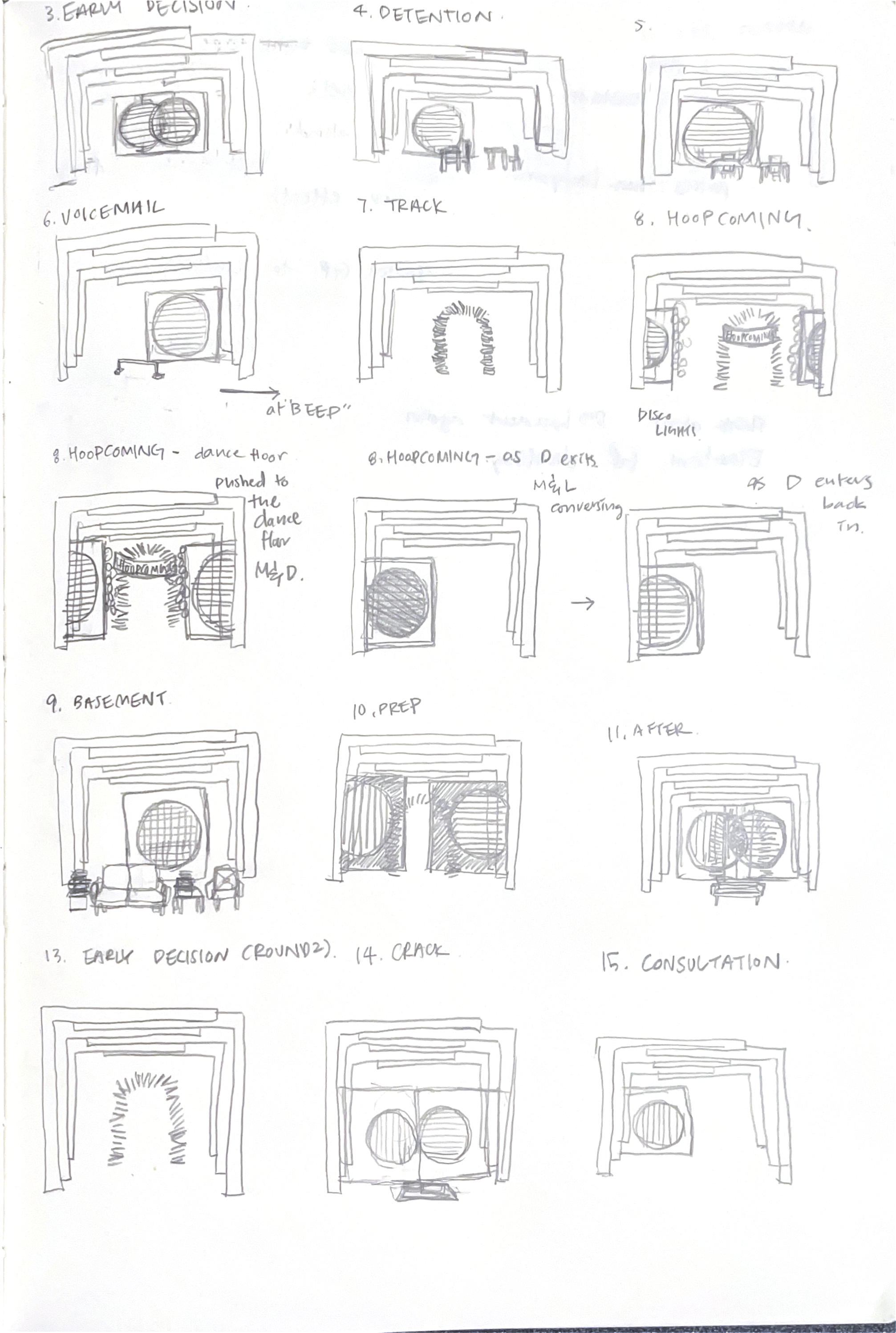
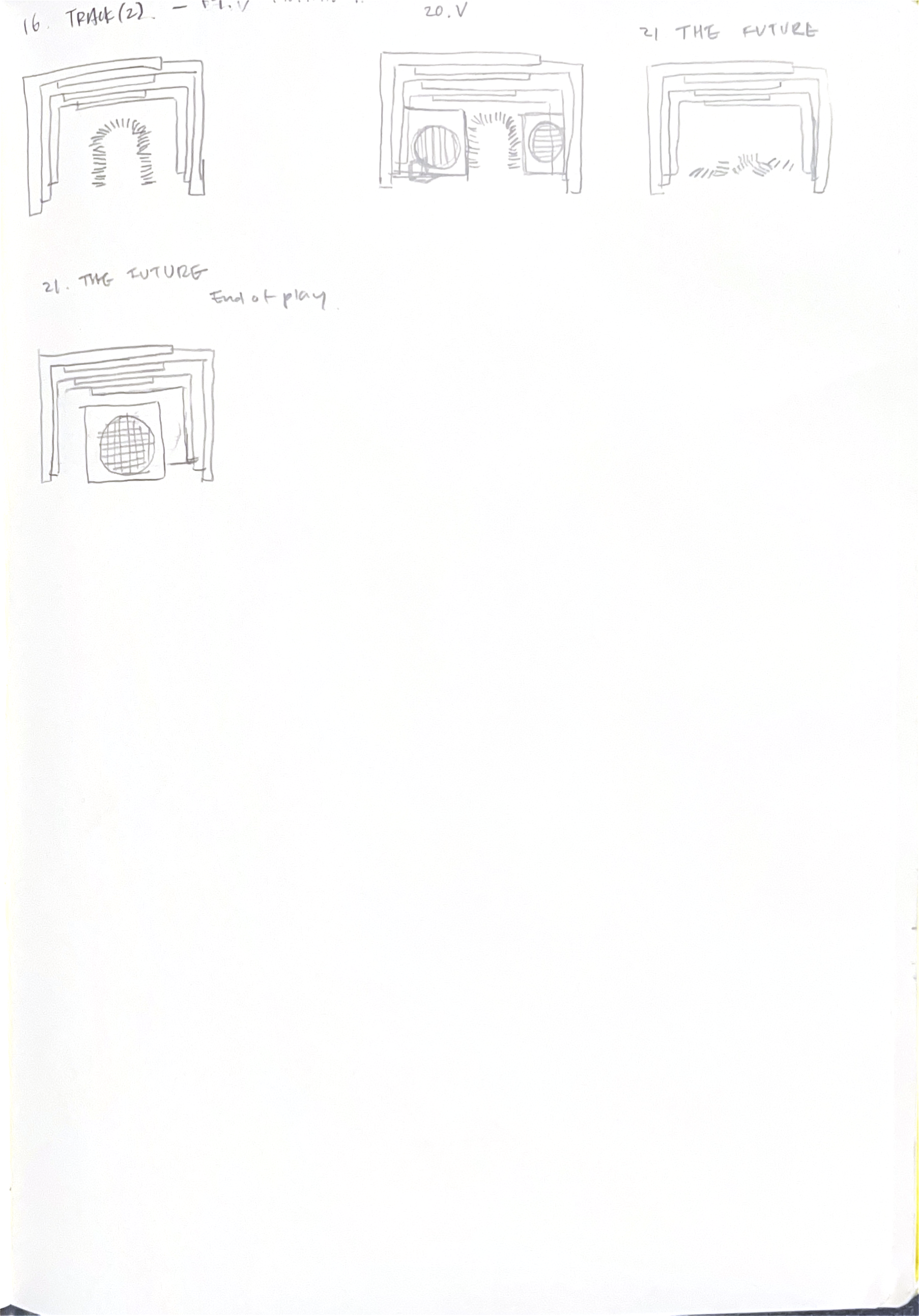
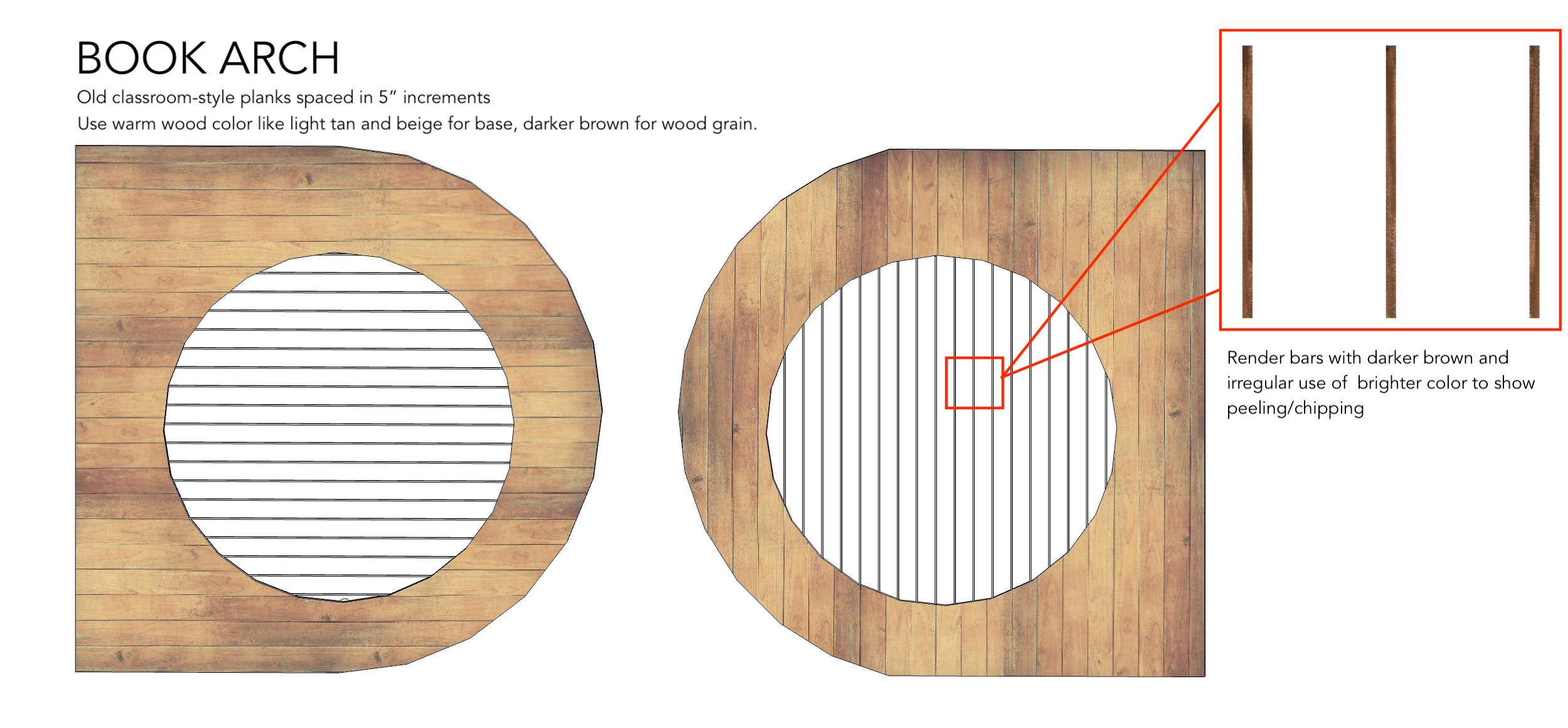
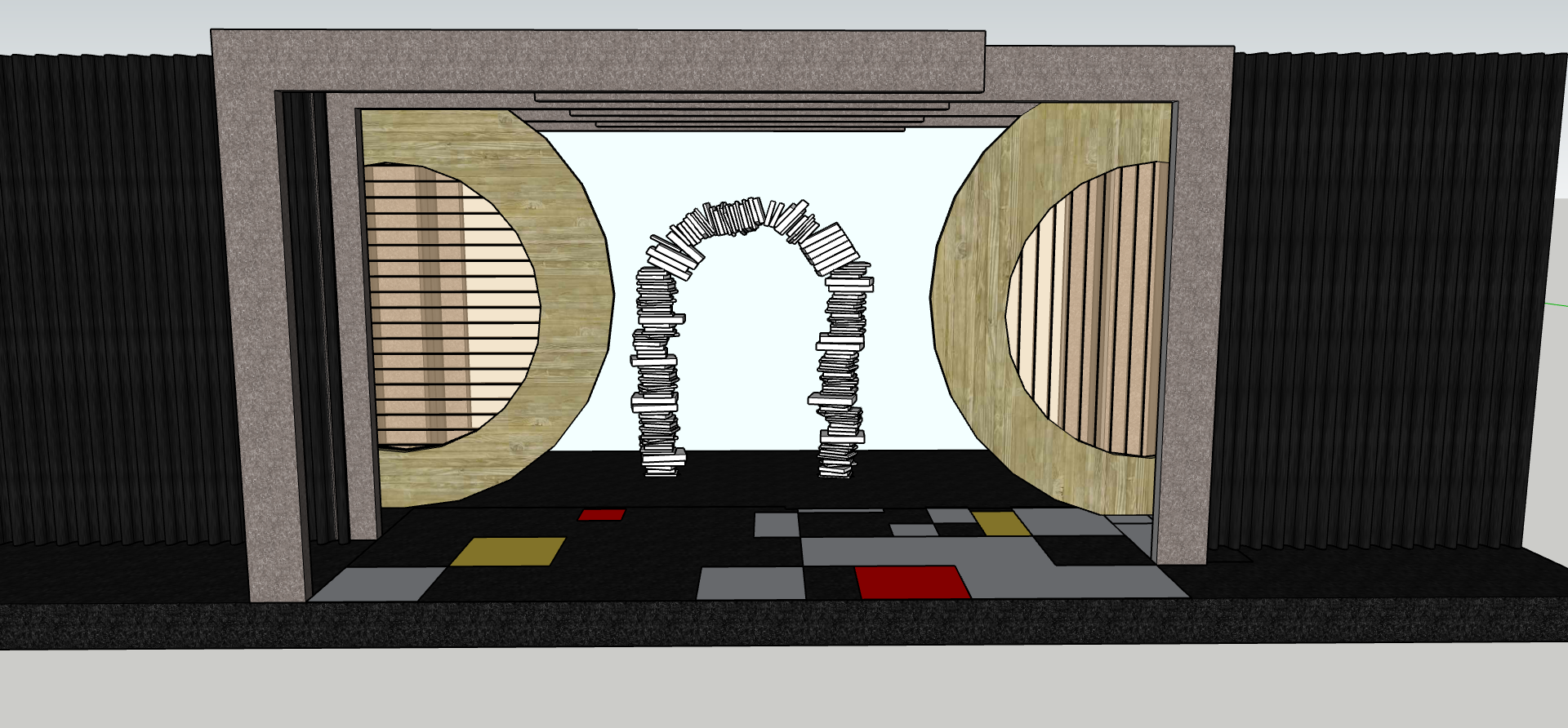
This production of Peerless is built around the idea that the twins share a single mind and a single world. The set visualizes this unified consciousness through two monumental circular portals that initially read as one complete form. These circles dominate the space, functioning as both environment and psyche—doorways into the twins’ shared perception of reality.
As the play progresses, the circles separate, physically manifesting the fracture of their once-singular identity. Though divided, the portals remain visually linked, reinforcing that the twins’ emotional and psychological bond is never fully broken. Each scene shifts the spatial relationship between the circles to reflect the intensity, imbalance, and distortion of their connection.
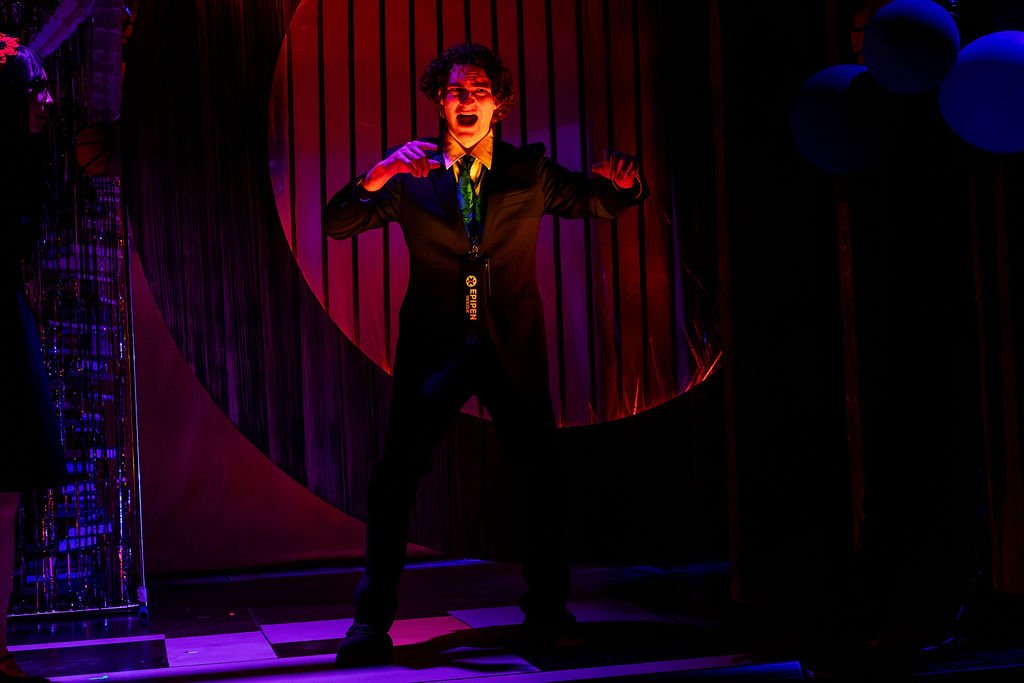
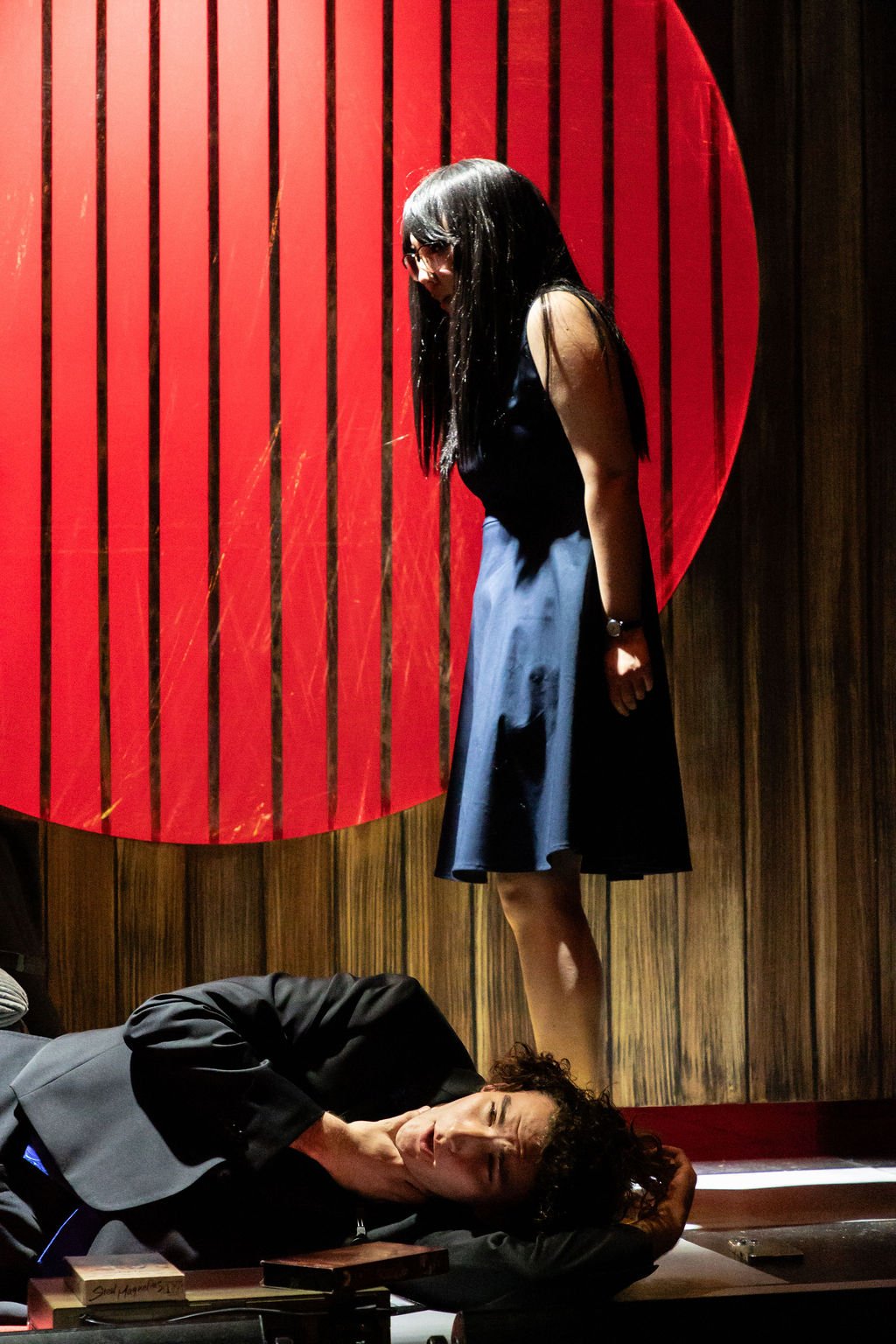
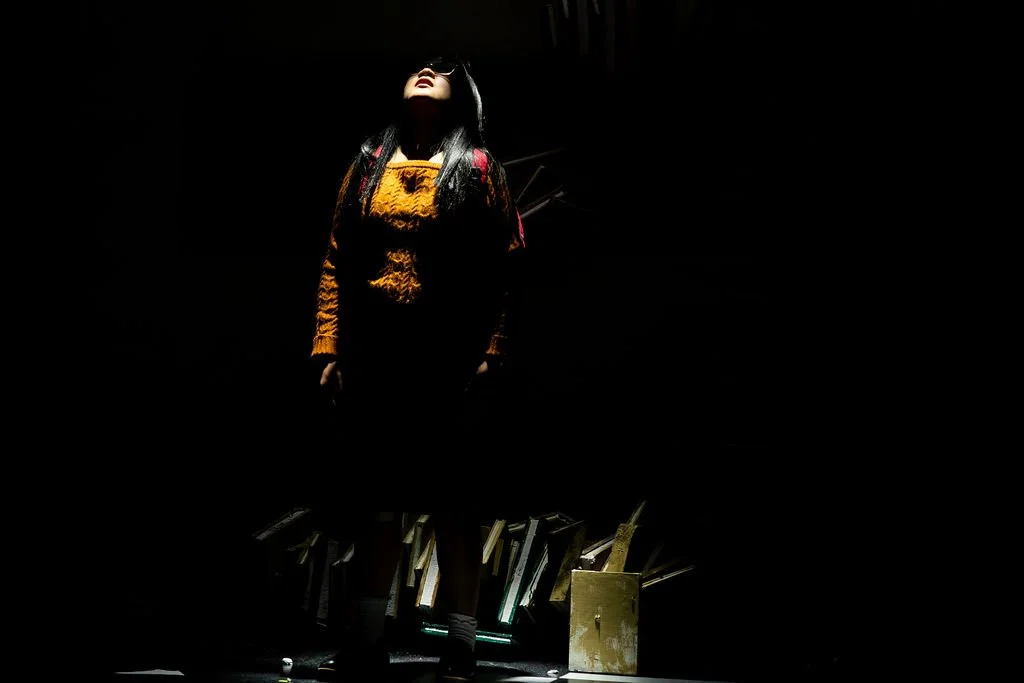
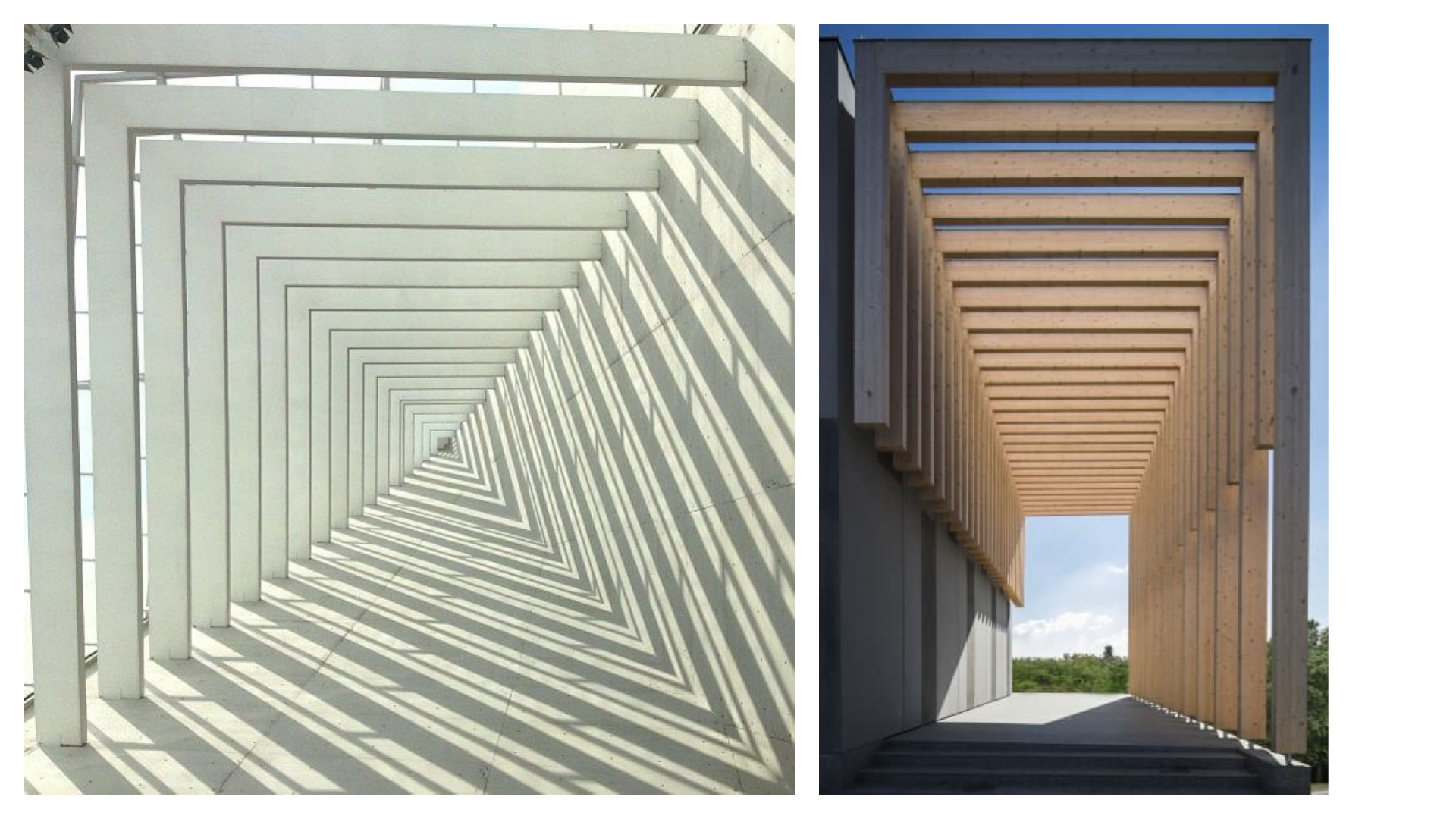
The slatted surfaces within the portals serve as a visual language for the twins’ mental state. Changes in angle, density, and orientation create a sense of pressure and instability, mirroring their obsessive focus and moral collapse. Light filtering through these slats fractures the space, suggesting thoughts splintering while still moving toward the same destructive goal.
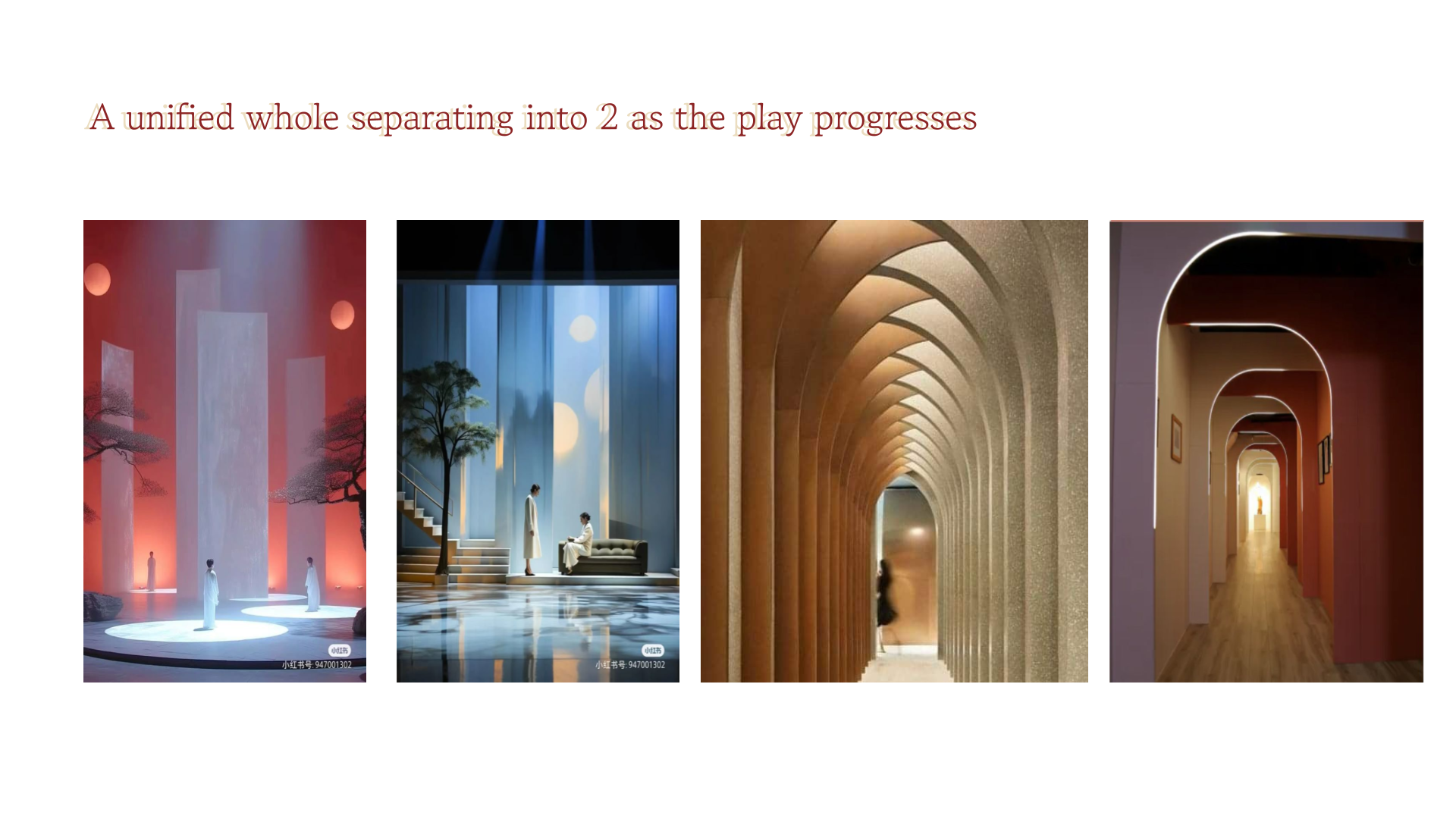
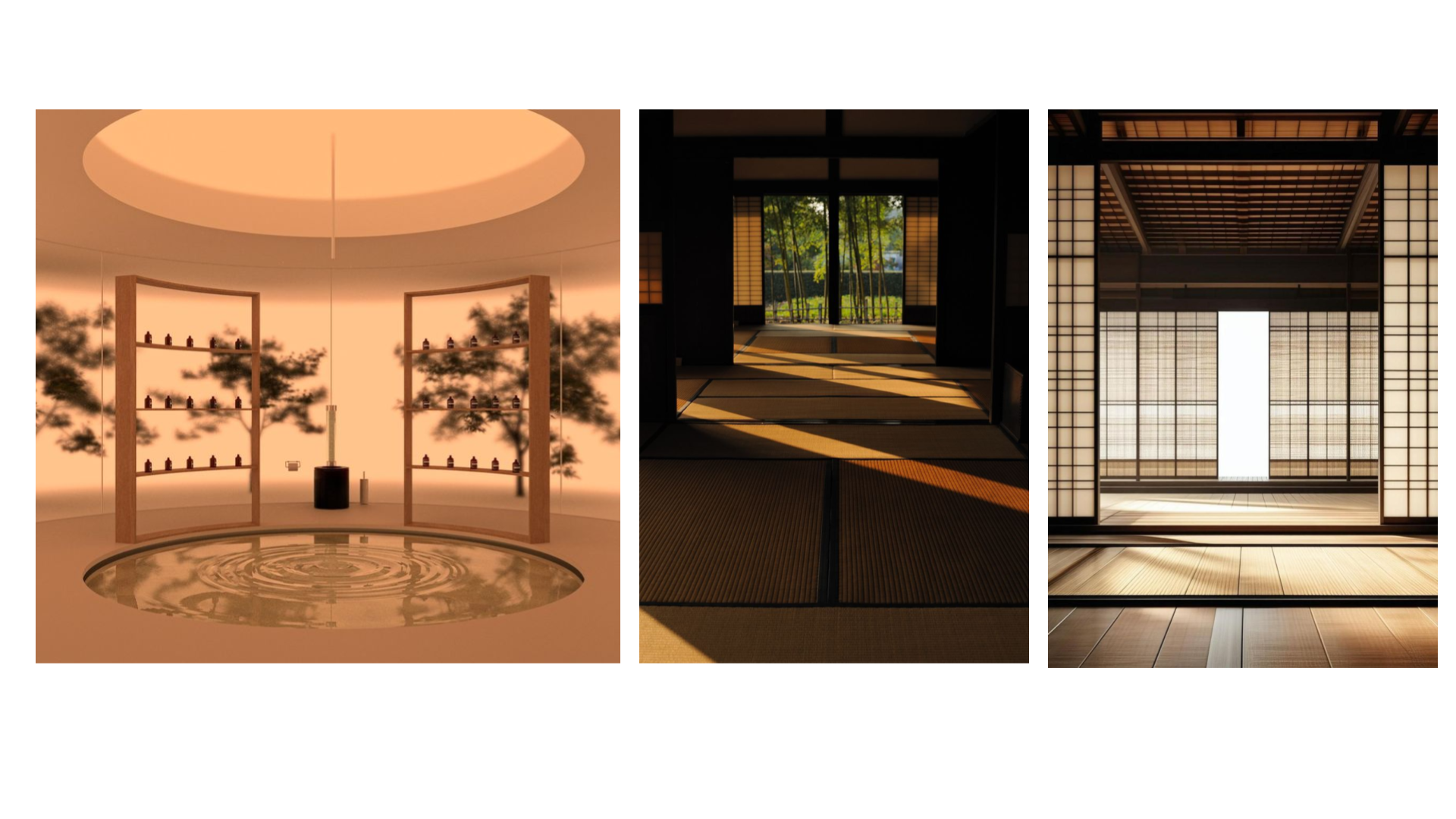
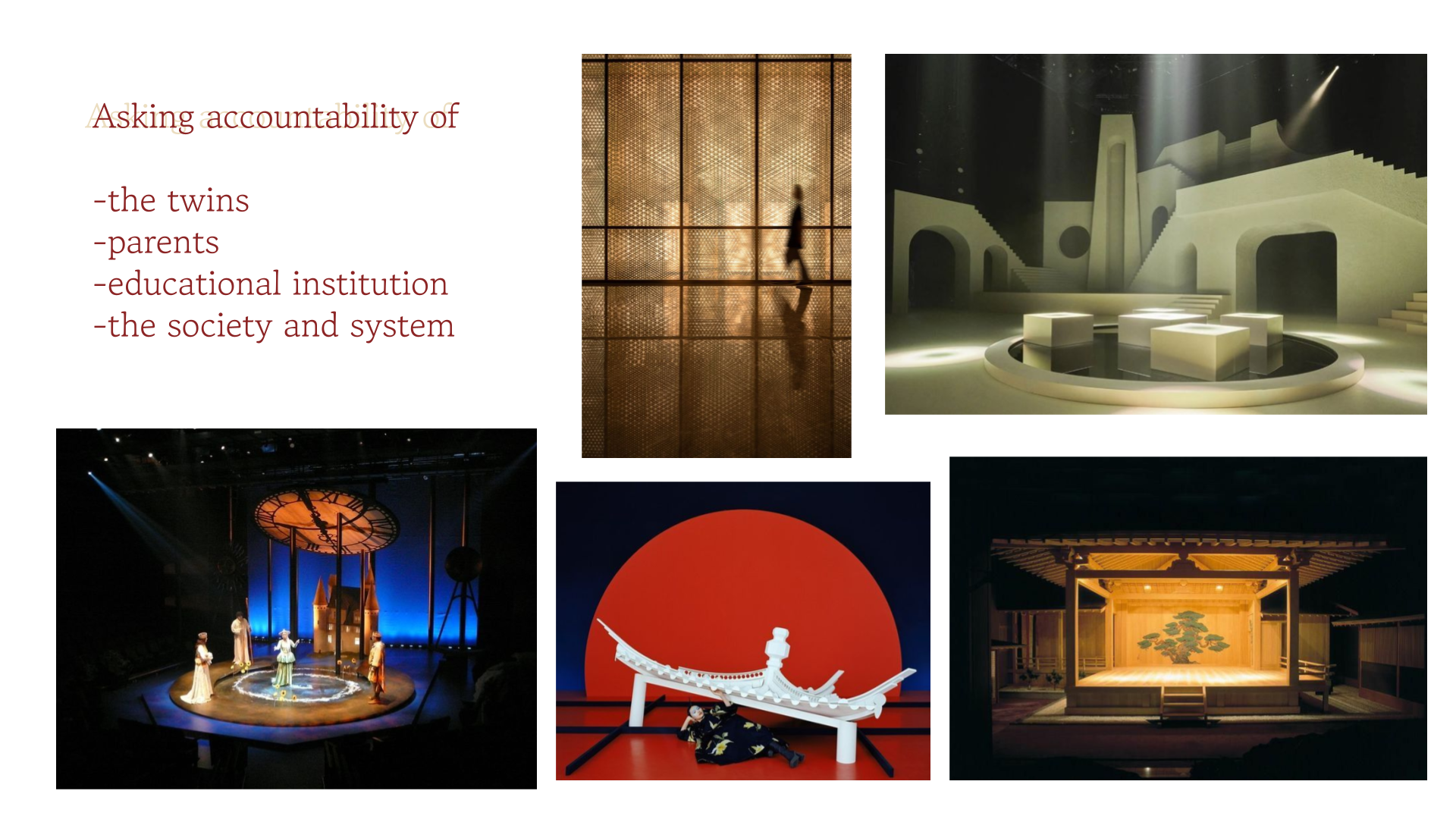
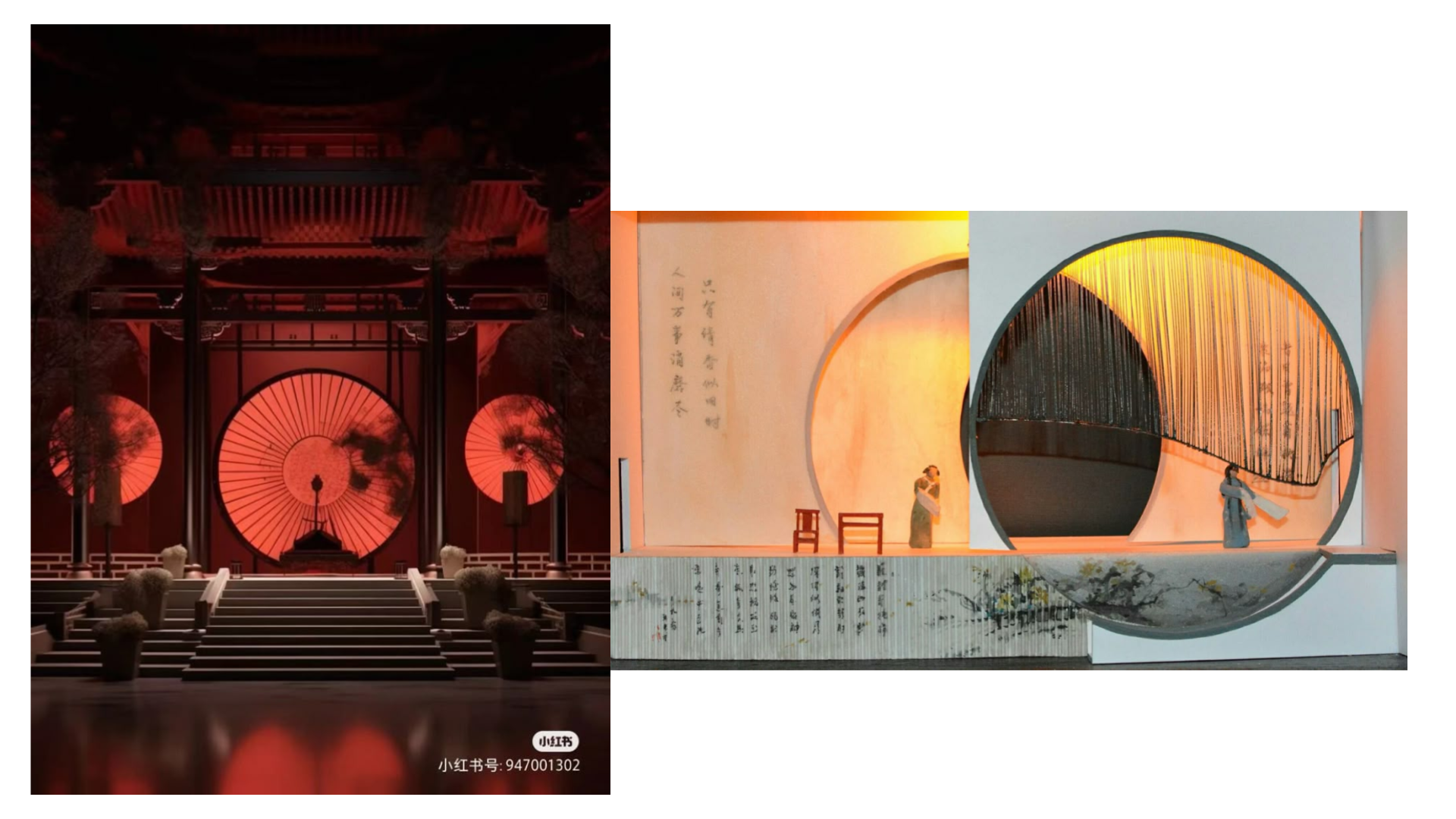
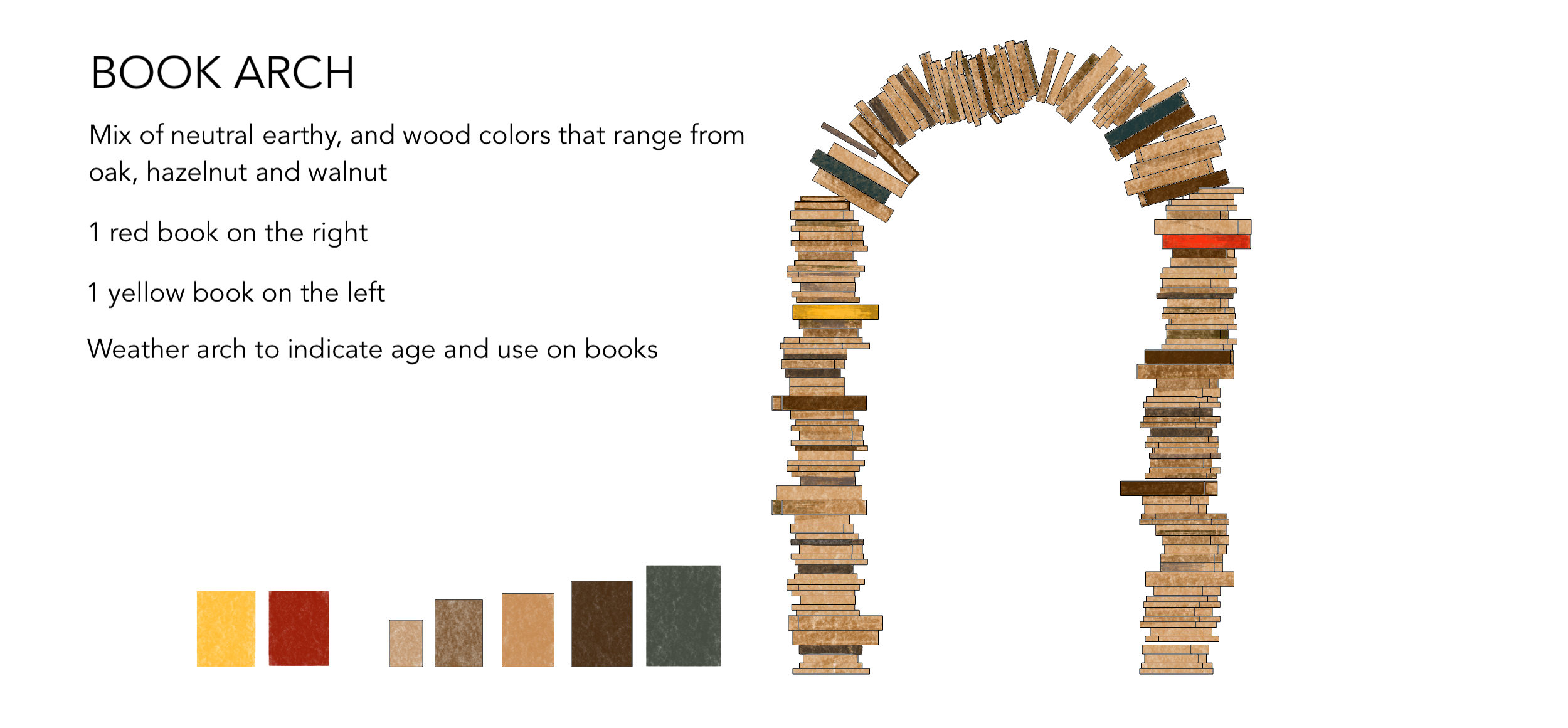
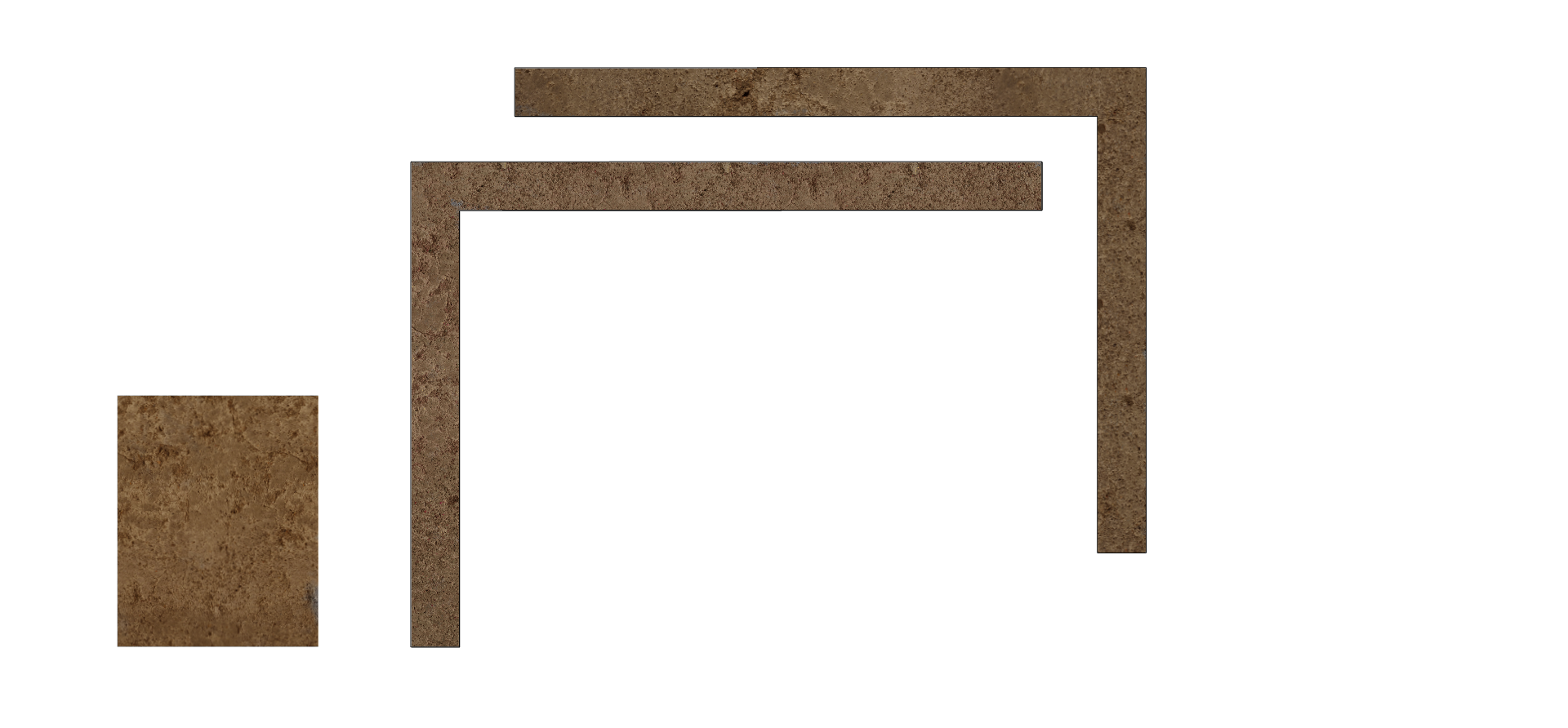
Inspired by geometric abstraction and East Asian architectural elements—roundness, screens, and cross-hatched layers—the design balances harmony and violence. What begins as a unified, ordered form becomes increasingly rigid and warped, embodying the twins’ descent from shared identity into fractured, ruthless ambition.
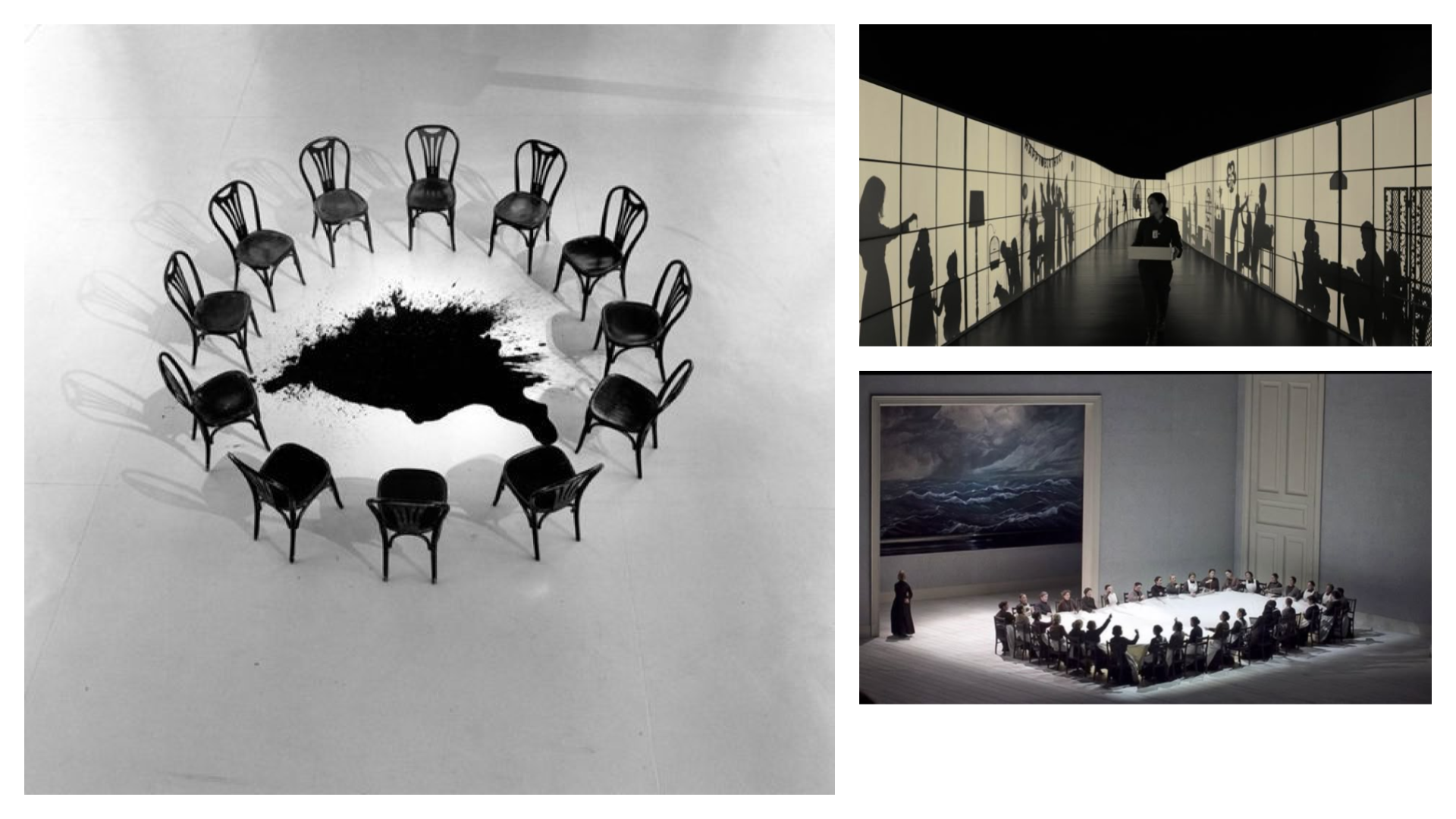
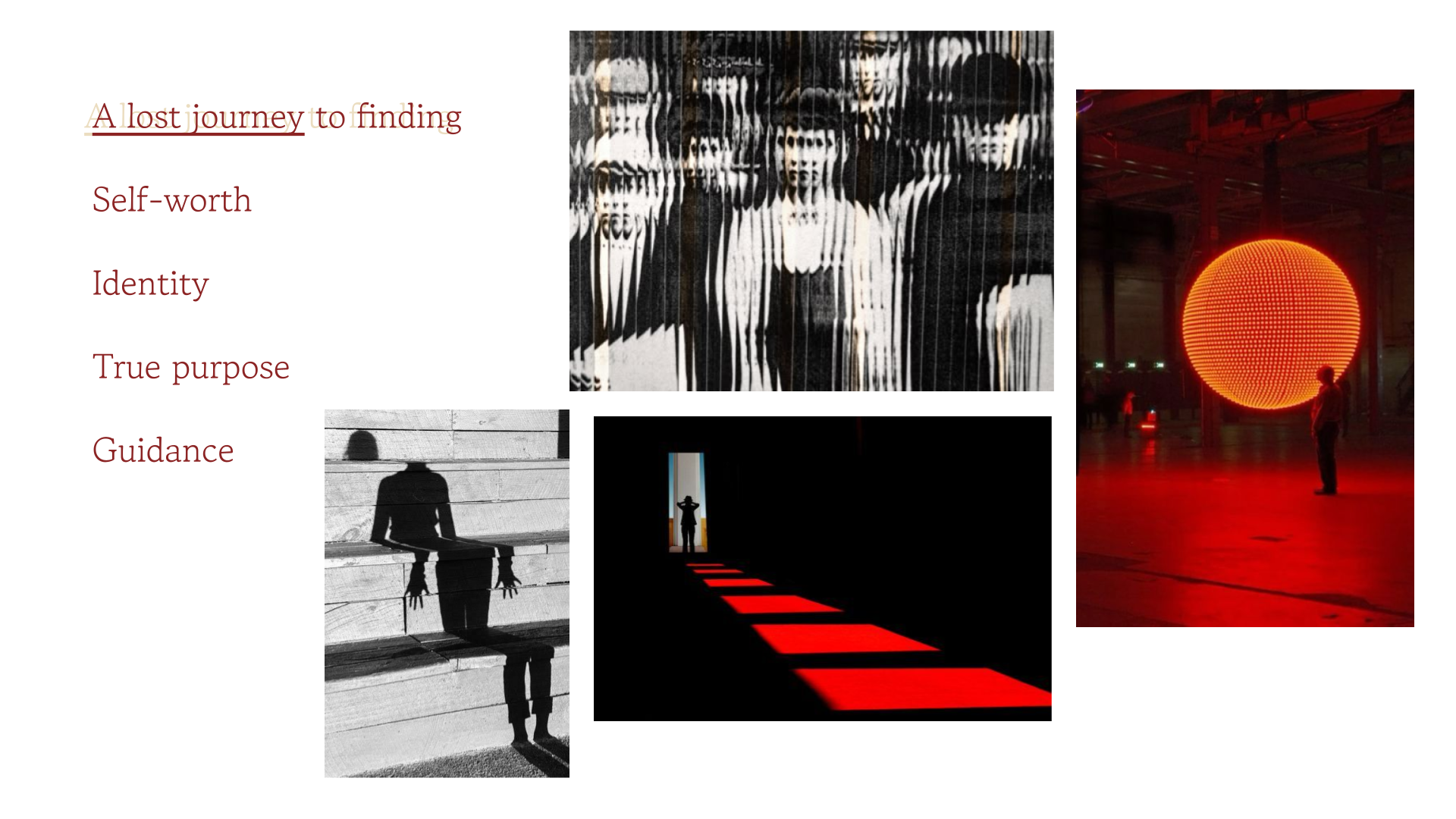
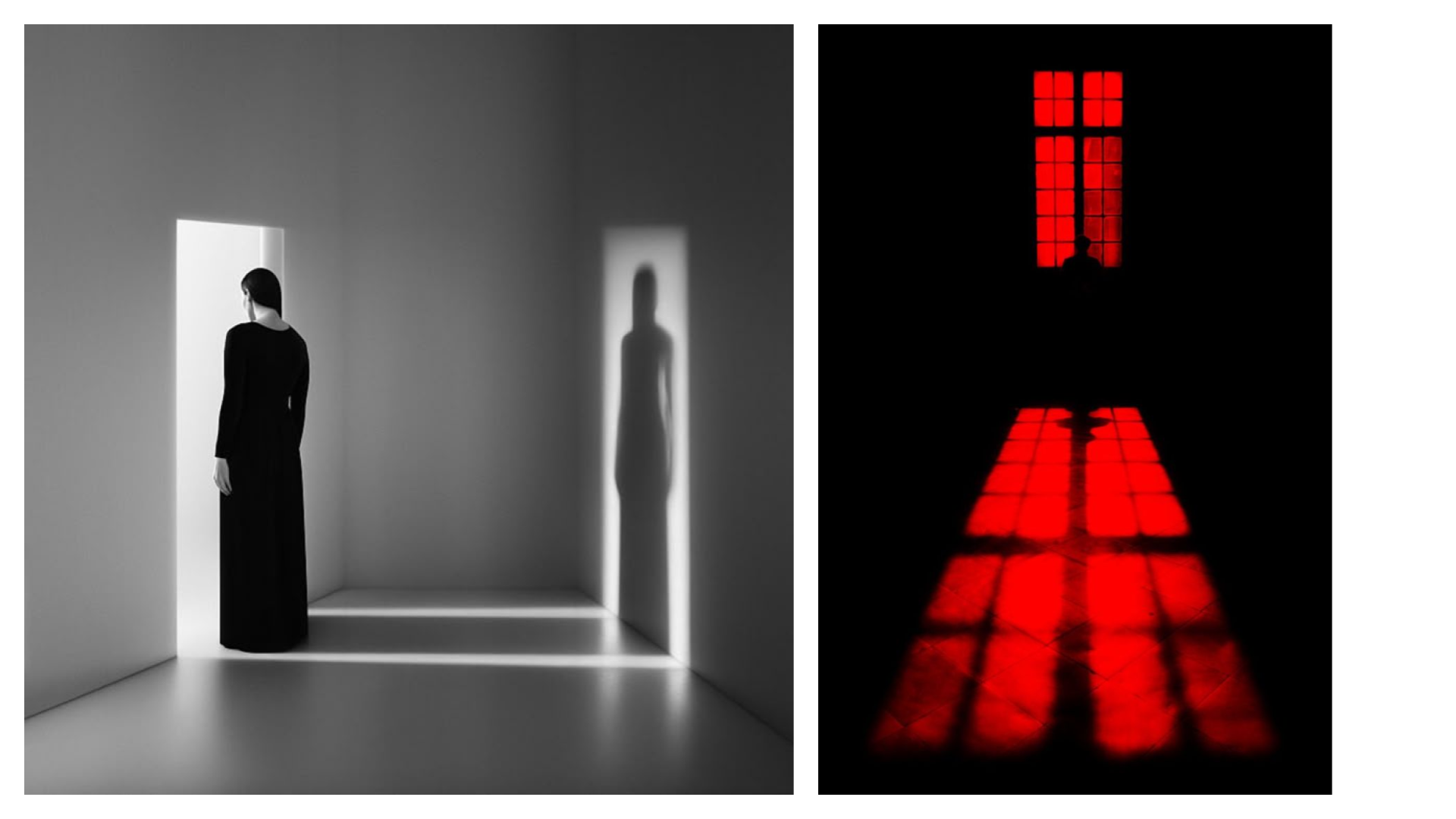
Research
Sketches
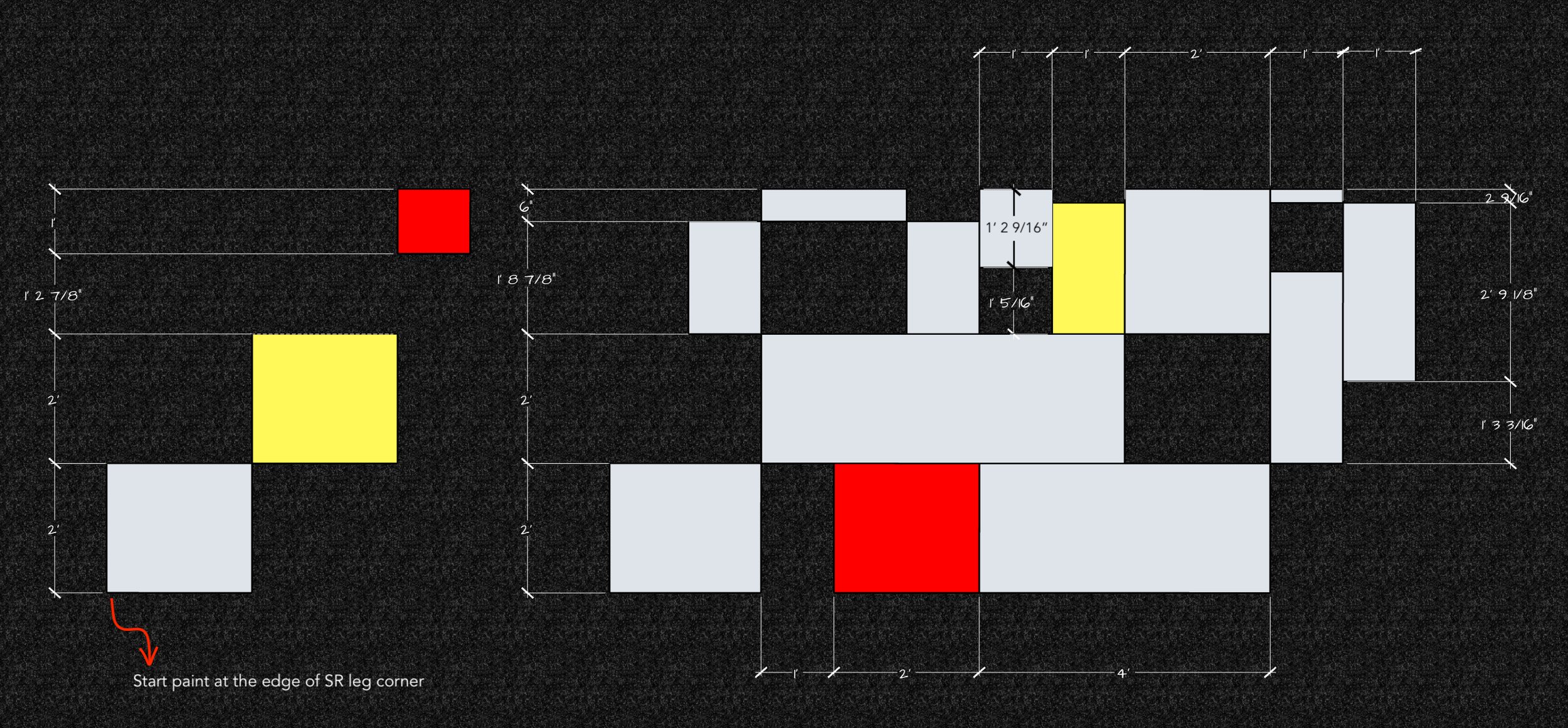
Paint Elevation

3D Model
Production Photos
Photos by Casey Gardner Ford